Tuzik’s life did not begin with noise.
There was no crying, no struggle, no scene that drew attention. He arrived quietly—so quietly that, for hours, no one noticed him at all. A small cardboard box rested near a gate on an otherwise ordinary street, blending into the stillness of the night. Whoever left him there did not linger. They placed the box down, turned away, and disappeared, leaving behind a life that could not follow.
Inside, a puppy waited.
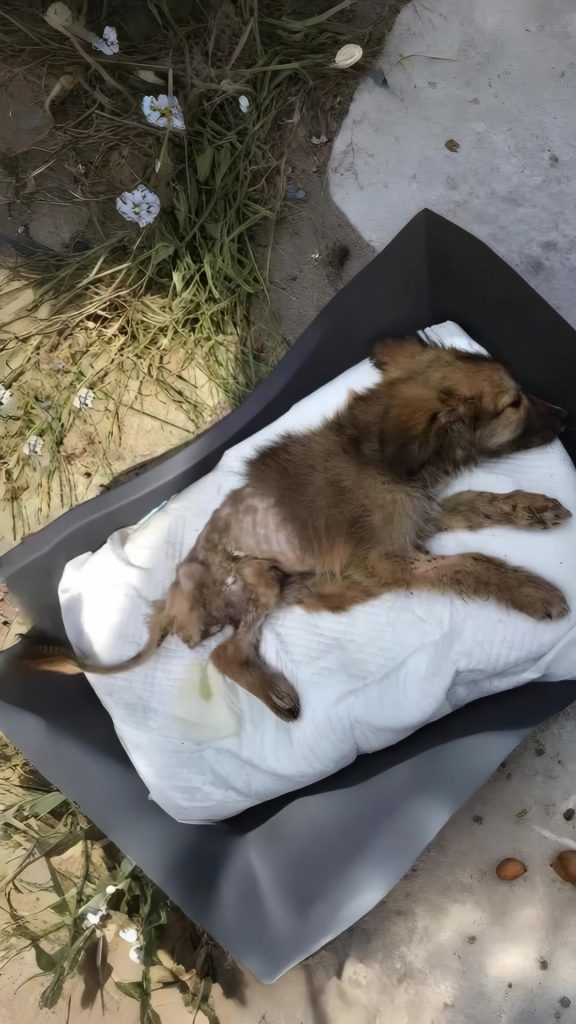
By morning, the world resumed its usual rhythm. Gates opened. Doors closed. And then someone saw the box. When it was opened, what they found was not movement or excitement, but exhaustion. Tuzik lay curled inside, barely responsive. He did not bark. He did not try to escape. He simply looked up, his eyes carrying more fatigue than fear.
From the beginning, Tuzik seemed to understand something instinctively: stillness was safer.
At the veterinary clinic, the answers came slowly but clearly. Tuzik could not move his legs. The paralysis was likely congenital, something he had been born with rather than something caused by the night before. His body was undernourished and dehydrated, weakened by a lack of care that had stretched far beyond his short life.
And yet, there was something that surprised everyone.
He was calm.
He allowed hands to lift him. He tolerated examination. He watched. He remained present. Even in a body that could not respond the way it should, his awareness remained intact—as if he hadn’t given up on the idea that the world might still offer something worth paying attention to.
That quiet awareness is what brought Svetlana Mischenko into his life.
Svetlana had spent years working with animals whose beginnings were uncertain and often cruel. When she learned about Tuzik, there was no hesitation, no long discussion about difficulty or outcome. She understood what he needed first was not a plan—but consistency.
Tuzik’s days began to follow a new pattern. Food arrived regularly. Hands touched gently. Voices stayed calm. His body rested while his nervous system learned something unfamiliar: nothing bad followed care.
Progress did not announce itself. It arrived in fragments.
At first, Tuzik spent most of his time lying still. He could not explore. He could not play. Even his tail remained motionless. Healing, at this stage, was invisible.
But inside, something was shifting.
His eyes began to track movement more attentively. He responded to voices. And then, one day, his tail moved—just slightly. It was a small gesture, easy to miss. But for those watching, it was everything. It meant his body was responding. It meant he was still reaching outward.
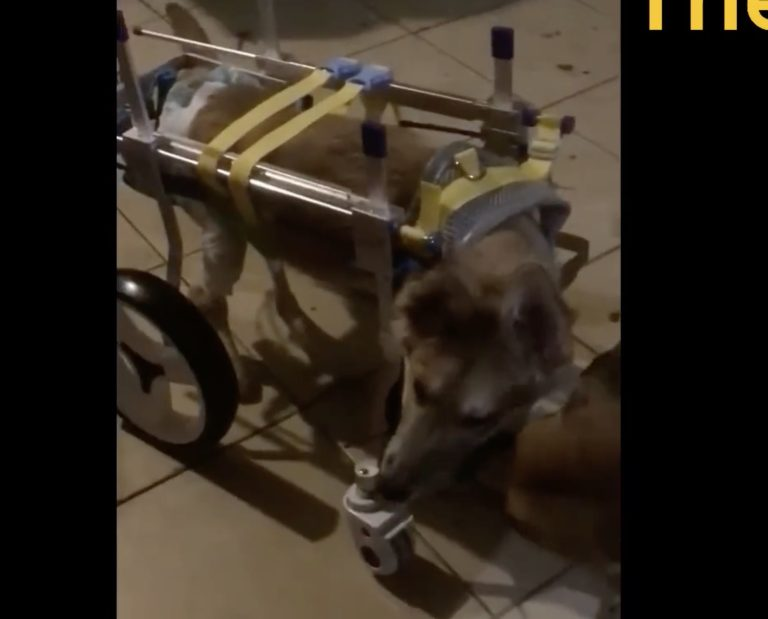
With the help of a mobility aid, Tuzik learned what motion could feel like. At first, he moved cautiously, unsure of balance or direction. He rolled forward, stopped, and took in the space around him. Over time, curiosity replaced hesitation. Toys became interesting. Sounds became invitations rather than warnings.
Week by week, Tuzik changed.
His coat thickened. His appetite improved. His body, once fragile, grew steadier. But the most meaningful transformation wasn’t visible in photos or measurements.
It was emotional.
Despite being left behind before he ever had a chance to understand the world, Tuzik chose trust. He leaned into human presence. He sought connection. He formed bonds with caregivers and other dogs, not out of dependence, but out of comfort.
There was no anger in him. No fear-driven aggression. Only a gentle willingness to accept what was offered.
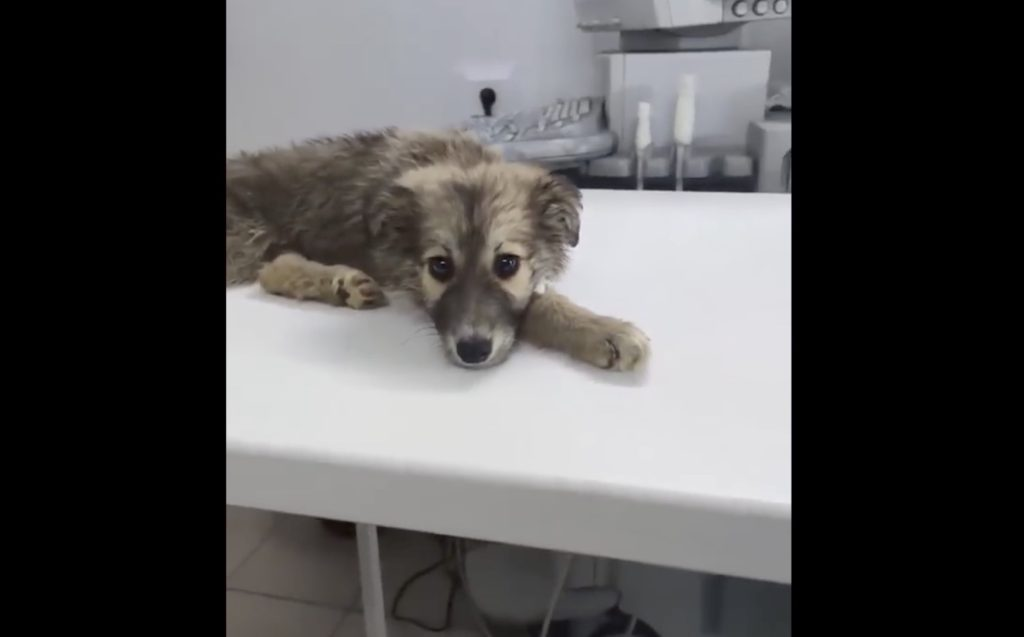
Today, Tuzik’s life is structured around care and routine. Therapy sessions. Playtime. Quiet moments of affection. He moves through his days with confidence, no longer defined by where he was found or how his life began.
His story does not demand outrage. It doesn’t ask for blame.
It asks for responsibility.
It reminds us that animals experience the world deeply—that they remember fear, but also recognize kindness. That healing is not just about repairing bodies, but about restoring safety and dignity.
Tuzik was once left in silence.
What changed his life was not a dramatic rescue or a single heroic act. It was something quieter and more enduring: someone chose to stay. Someone chose to care. Someone believed that his life was worth the effort it required.
And because of that choice, a puppy who arrived without a sound now lives surrounded by warmth, stability, and trust.
That is the real transformation.
And it’s one worth remembering.