Leo didn’t wander anymore.
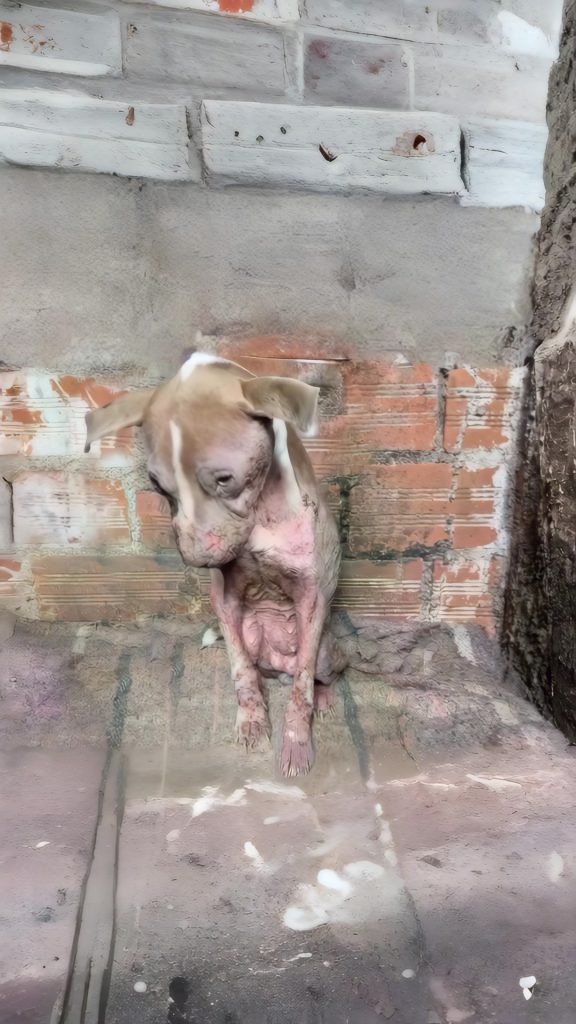
By the time help found him, he no longer had the strength to search for it.
He lay still beside a concrete wall, his body thin to the point of fragility. Hunger had reshaped him — hollowed his frame, dulled his coat, and slowed every movement until even lifting his head felt like too much. The streets had taken everything they could from him. All that remained was endurance.
People passed by every day.
Leo had learned not to react.
He didn’t bark.
He didn’t chase footsteps.
He simply waited.
On a cold morning, a woman noticed him because he didn’t move at all. Something about the stillness felt wrong — not rest, not sleep, but exhaustion at its limit. When she stepped closer, Leo’s eyes met hers. They weren’t pleading. They were tired. As if he was asking only one thing: Is it over?
She stopped.
She knelt down, slowly, careful not to frighten him. Leo didn’t pull away when her hand reached him. He didn’t flinch. He accepted the touch without resistance — not because he trusted easily, but because he had nothing left to fear losing. That moment marked the end of his waiting.
Help arrived soon after.
At the veterinary clinic, the damage became clear. Severe malnutrition. Dehydration. A body that had been surviving far beyond its limits. Yet beneath the weakness, Leo’s heart was steady. His will — quiet but intact. The veterinarians believed he could recover, if his body was given the time and care it had been denied for so long.
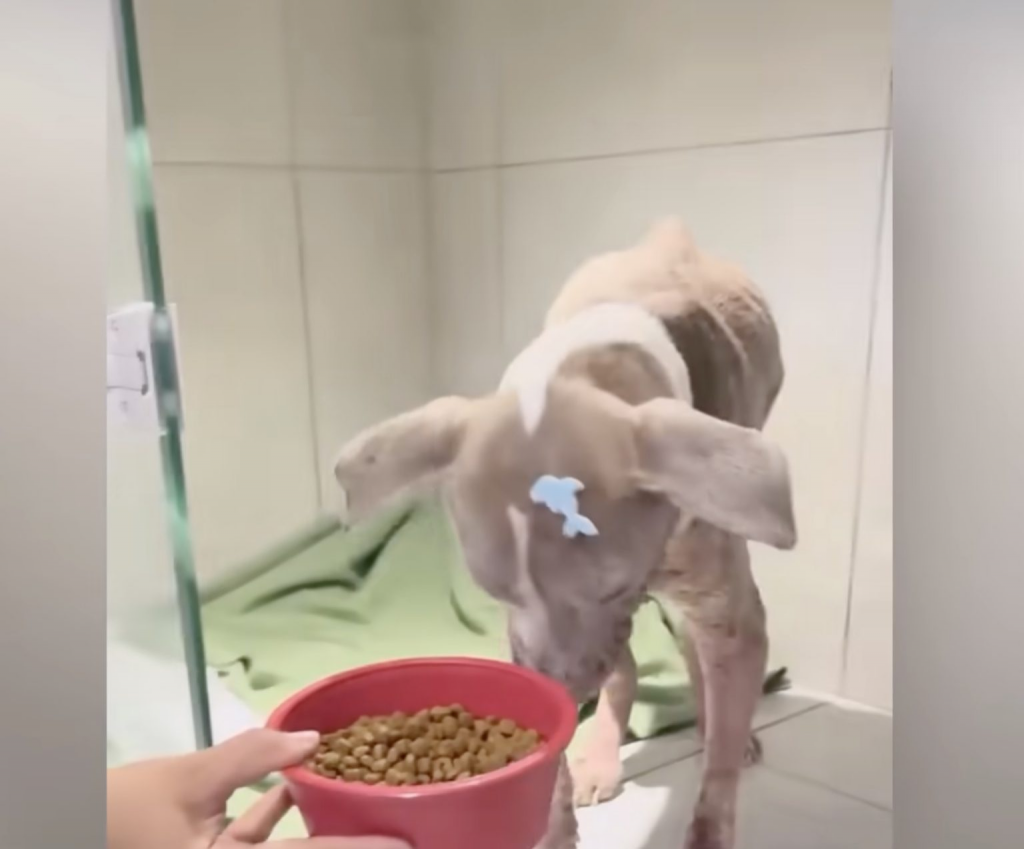
The first days were fragile. Food came slowly, in small amounts, as his system relearned how to accept nourishment. Leo ate cautiously, pausing between bites, unsure if this safety would disappear as suddenly as it had arrived. But nothing was taken away. The bowl kept coming back. The hands stayed gentle.
For the first time in a long while, Leo slept deeply.
Not the half-alert sleep of the streets, but real rest — curled on a blanket, breathing evenly, his body finally allowed to let go. That was when everyone knew: he wasn’t just surviving anymore. He was healing.
Video He Stayed Where He Fell — Hoping Someone Would Finally See Him
As weeks passed, Leo was moved to a quiet shelter where recovery could continue without pressure. There, his changes were subtle but undeniable. His coat began to fill in. His strength returned slowly, step by step. And his eyes — once distant — began to follow movement with curiosity instead of caution.
Leo was gentle in a way that felt intentional. He didn’t rush toward people, but when he approached, it was with calm trust. He leaned into affection, resting his head against volunteers as if grounding himself in the moment. He asked for nothing — and that made people notice him even more.
He found joy in simple things. Warm bedding. A familiar voice. The comfort of knowing food would come again. His presence carried a quiet peace, and soon, it was impossible to imagine the shelter without him.
When the time came for adoption, the right family saw what others had missed before — not weakness, but resilience. They saw a dog who had endured without bitterness, who moved through the world with patience and grace. They chose him without hesitation.
Leo adjusted quickly to his new home, not because he forgot his past, but because he finally felt secure enough to move forward. He learned routines. Claimed favorite resting spots. Walked without scanning every corner for danger. He followed his people simply because he wanted to be near them.
Today, Leo’s life is full. His body is strong, his coat soft, his eyes open and trusting. He enjoys long walks, quiet afternoons, and the comfort of belonging. He is no longer invisible. He is no longer waiting.
Leo’s story isn’t about rescue alone.
It’s about noticing.
About stopping.
About how one moment of compassion can pull a life back from the edge.
He stayed where he fell because he had no other choice.
But someone finally saw him — and that made all the difference.