There are lives that disappear not because they are hidden, but because no one ever pauses long enough to notice them.
Milo lived one of those lives.
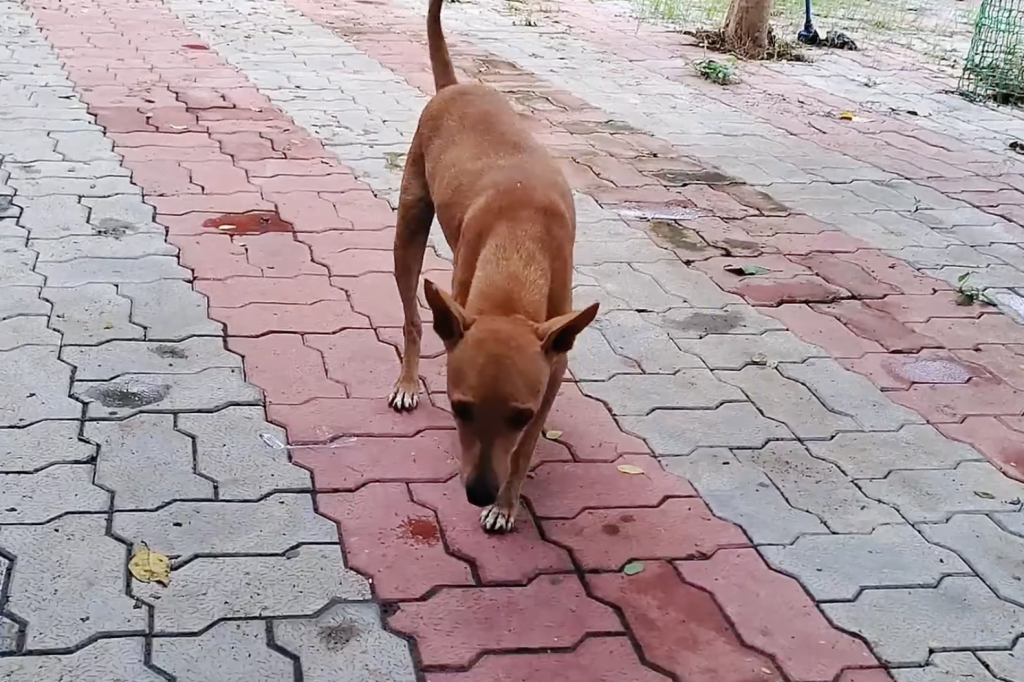
Every day, the city moved around him without interruption. Cars passed. Doors opened and closed. Footsteps hurried by with purpose. The buildings aged quietly, the routines repeated themselves, and Milo remained exactly where he had always been—on the edge of it all, surviving without being seen.
No one could say when he first arrived. What was certain was how little he asked for. He learned early to stay still, to conserve energy, to exist without drawing attention. Food came when it could. Water was never guaranteed. His body adapted to scarcity, growing thinner, slower, more deliberate with every movement.
He did not defend territory.
He did not bark for help.
He simply waited.
Milo understood rhythm. Mornings were safer when the streets were quieter. Midday brought noise and movement he learned to avoid. Nights were long, uncertain stretches where routine became his only shelter. He returned to the same places again and again—not because they were kind, but because they were familiar.
Over time, he blended in.
People passed him daily without realizing they had seen him before. He became part of the background—a presence so constant it faded into normalcy. And that, perhaps, was the hardest part. Not hunger. Not fatigue. But invisibility.
Until one afternoon, when routine was interrupted.
Someone noticed that Milo had not moved for hours.
The city was as busy as ever, but Milo remained still, his body stretched out in quiet surrender. When a stranger approached, there was no panic. No attempt to escape. He lifted his head slowly and met their gaze—not pleading, not afraid. Just waiting.
It was enough.
Help arrived without urgency, but with care. Voices stayed soft. Movements were slow. Food and water were offered without expectation. Milo accepted cautiously, as if unsure whether this moment would vanish like so many others before it. When he was guided away, he followed without resistance. Trust came easily to him—not because he had known kindness, but because he had learned patience.
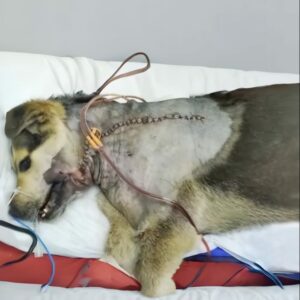
At the clinic, the story his body told was familiar. Dehydration. Malnutrition. Muscle loss from months—perhaps years—of instability. Nothing sudden. Nothing dramatic. Just the quiet accumulation of neglect.
And yet, there was hope.
The days that followed were defined by rest. Real rest—the kind that comes without alertness, without fear. Milo slept deeply, his body finally allowed to recover from constant vigilance. Meals came regularly, small and careful at first. He ate slowly, watching, learning that nourishment would return again tomorrow.
What surprised everyone was how open he remained.
He leaned into gentle voices. He relaxed under calm hands. His eyes, once distant, began to follow movement with interest rather than caution. Recognition formed. Familiarity grew. Milo had not closed himself off—he had simply been waiting for consistency.
Healing came gradually.
Strength returned in small ways: standing a little longer, walking a little farther, exploring without retreat. His coat softened. His posture changed. The dog who once carried himself as if trying not to exist began to take up space again.
And with strength came personality.
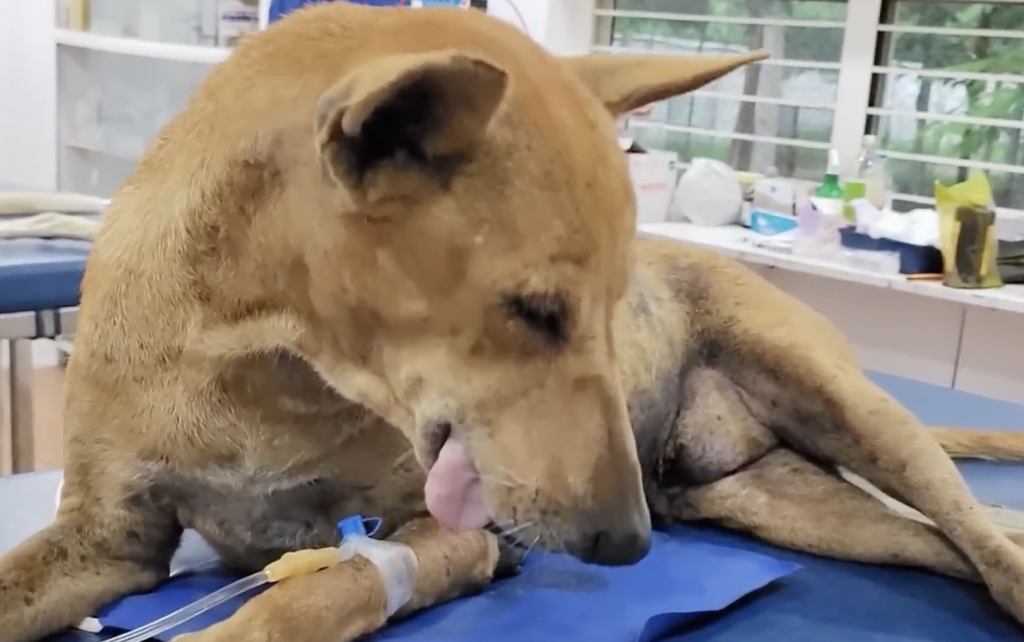
Milo was observant. Quietly affectionate. He didn’t seek attention, but he valued presence. He rested close to those he trusted, found comfort in predictable routines, and developed a fondness for warm sunlight—stretching out peacefully in places that felt safe.
When he was ready, his story was shared—not as a tragedy, but as a testament to resilience.
A family saw him and understood.
They didn’t rush his transition. They allowed silence. They respected hesitation. Home life unfolded slowly, on Milo’s terms. New sounds. New spaces. New rhythms. And Milo adapted, the way he always had—carefully, patiently.
Soon, he began following them from room to room. Walks became moments of curiosity instead of caution. Blankets became places of rest, not temporary refuge. He no longer watched the world pass him by.
He belonged within it.
Today, Milo is no longer part of the background. He is a quiet presence in a home filled with routine and warmth. His past has not disappeared—but it no longer defines him.
All it took was one moment of attention.
One pause.
One decision to see what had always been there.
And that was enough to change everything.