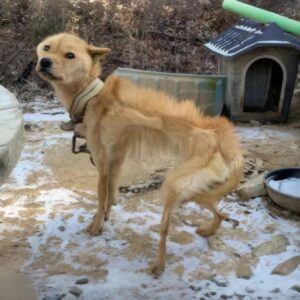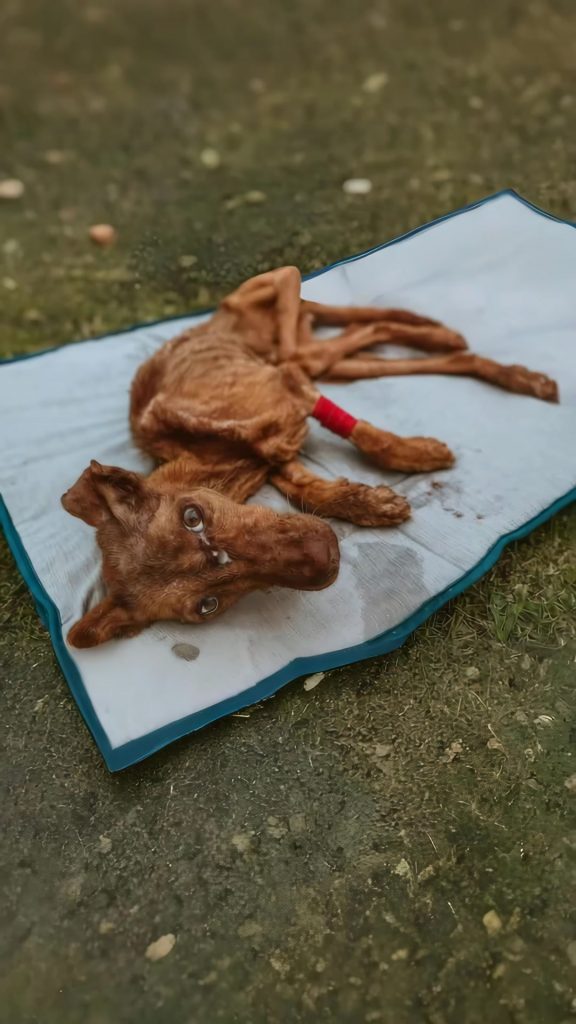
When she was finally noticed, it almost felt like an accident of fate. Lying near the edge of an abandoned roadside, she blended into the stillness around her—so weak, so quiet, that most people would have passed without realizing a life was fading there. Her body was painfully thin, her limbs motionless, and her eyes reflected a deep, overwhelming exhaustion. She wasn’t calling for help. She no longer had the strength.
For a long time, she had been alone.
No one knew exactly how many days or weeks she had survived this way, but her condition told a clear story. Hunger had hollowed her frame. Dehydration had drained her energy. Whatever hardship had led her there had not been sudden—it was the slow, cruel result of being forgotten. She could no longer stand. She couldn’t even cry out. And yet, somehow, she was still breathing.
When rescuers approached, they did so carefully, speaking softly so as not to frighten her. She barely responded. Her head lifted only slightly, as if even that small movement required everything she had left. But in her eyes, there was something unexpected—not panic, not resistance, but quiet acceptance. It was as though she sensed that this moment mattered. That help had finally arrived.
She was gently placed onto a warm blanket and carried away from the place where she had been left behind. The ride to the clinic was silent, heavy with emotion. No one spoke much. Everyone understood how fragile she was—and how close she had come to slipping away unseen.
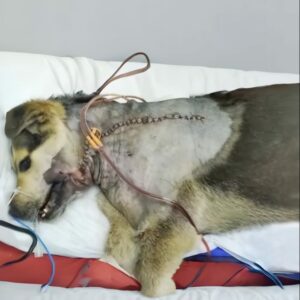
At the veterinary clinic, the medical team moved quickly but carefully. Her body temperature was dangerously low. Severe dehydration and malnutrition had weakened her entire system. Every step of her care had to be measured and gentle. Fluids were introduced slowly. Nutrition was carefully controlled. The goal wasn’t progress—it was survival.
The first few days were uncertain. There were no dramatic improvements, no sudden changes. But something important happened: she stopped getting worse. Her body held on. And in situations like hers, that alone is a victory.
Video Trapped, starving, and forgotten… She can’t stand. She can’t cry. But she’s still fighting
Despite everything she had endured, her temperament remained remarkably calm. She didn’t flinch when hands reached toward her. She didn’t growl or pull away. Instead, she accepted the care with quiet stillness. When someone spoke gently, her eyes softened. Slowly, trust began to replace survival instincts.
As nourishment reached her body, subtle changes appeared. Her breathing grew steadier. She began lifting her head more often, observing the room around her. She watched the people who came and went, learning their voices, their routines. And then one day, with effort and determination, she tried to stand.
It wasn’t graceful. Her legs shook, and she needed support. But she did it.
From that moment on, progress followed in small, meaningful steps. Meals became easier. Strength returned gradually. Her body responded to the care it had been denied for so long. Volunteers provided her with a quiet space—soft bedding, low light, and gentle routines that allowed her to rest deeply without fear.
Sleep became her refuge. And in that rest, healing began to take root.

Weeks later, the transformation was undeniable. Her coat improved, regaining texture and warmth. Her eyes grew brighter, filled with curiosity rather than emptiness. She began wagging her tail softly when familiar faces appeared. Each gesture was small, but together they told a powerful story—she was coming back to life.
Short walks were introduced, guided patiently by people who understood her limits. Each step built confidence. The outside world, once associated with abandonment, slowly became a place of possibility again. Sunlight, fresh air, and gentle movement reminded her that life could be more than survival.
Emotionally, she changed too. Sudden sounds no longer startled her. She leaned into human presence, seeking comfort instead of avoiding it. She formed quiet bonds with her caregivers, expressing gratitude not with noise, but with closeness.
Eventually, the team knew she was ready for the next chapter. She no longer needed intensive care—she needed a home. A place where patience, consistency, and love would guide the rest of her journey.
The day she left the shelter was filled with quiet joy. She walked calmly, her steps steady, her posture confident in a way no one could have imagined weeks earlier. She was no longer the motionless dog by the roadside. She was a survivor, moving forward.

Today, she lives in safety. She enjoys peaceful afternoons, gentle walks, and the comfort of being close to people who value her presence. Her past no longer defines her—it strengthens her story.
Her journey is not about miracles. It’s about what happens when someone chooses not to walk away. About patience, steady care, and the belief that even the most overlooked life deserves a chance.
She couldn’t stand. She couldn’t cry.
But she fought quietly—and she won.